Switchboard
Series A startup focused on improving remote team collaboration during and between meetings
I was one of two product designers working daily with the VP of Product to reimagine how distributed teams can work together more effectively.
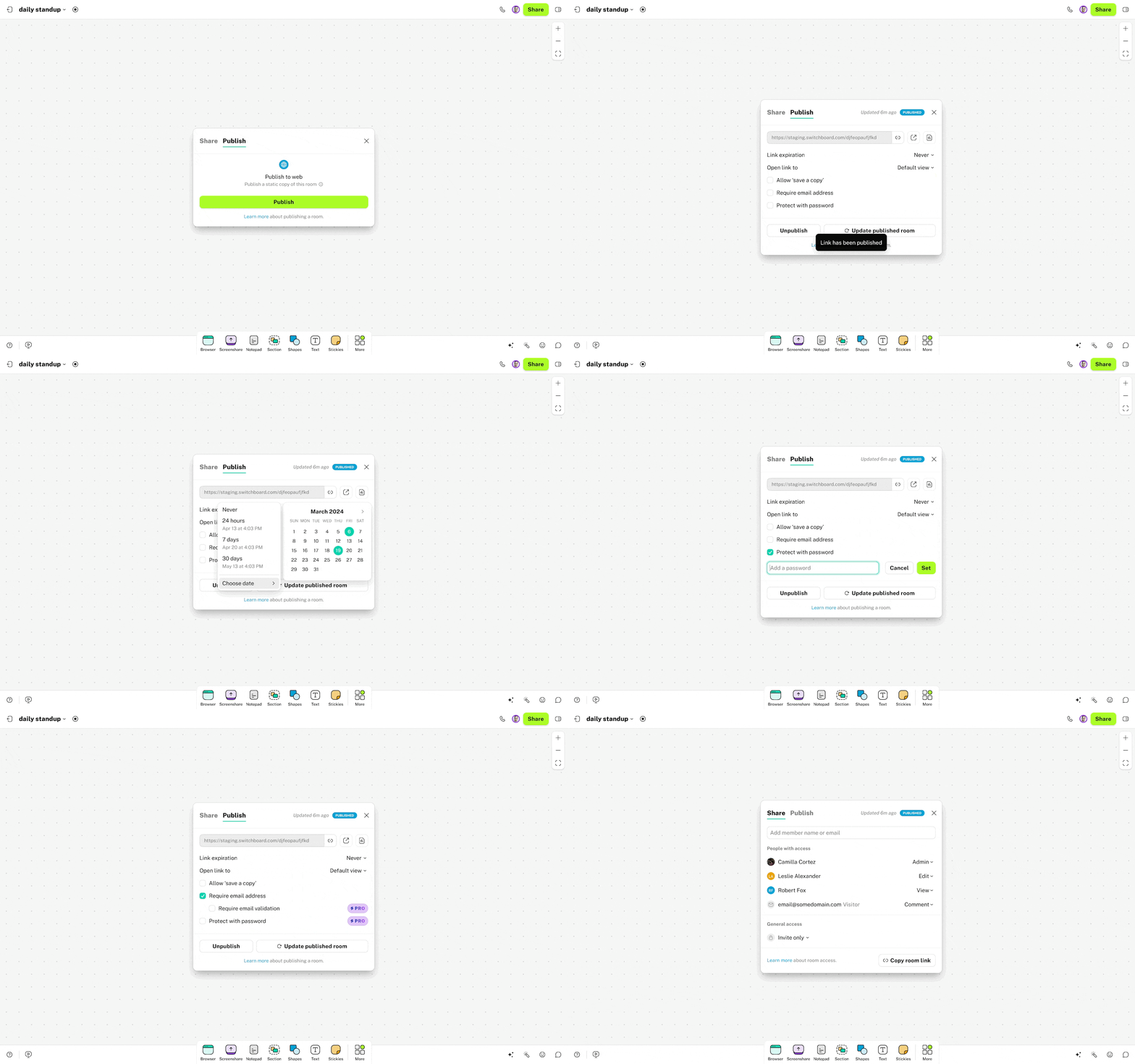
I designed a wide range of zero to one features, including publishing tools, widgets, AI integration, whiteboarding tools, notifications, pricing & plans, as well as sharing & permissions.
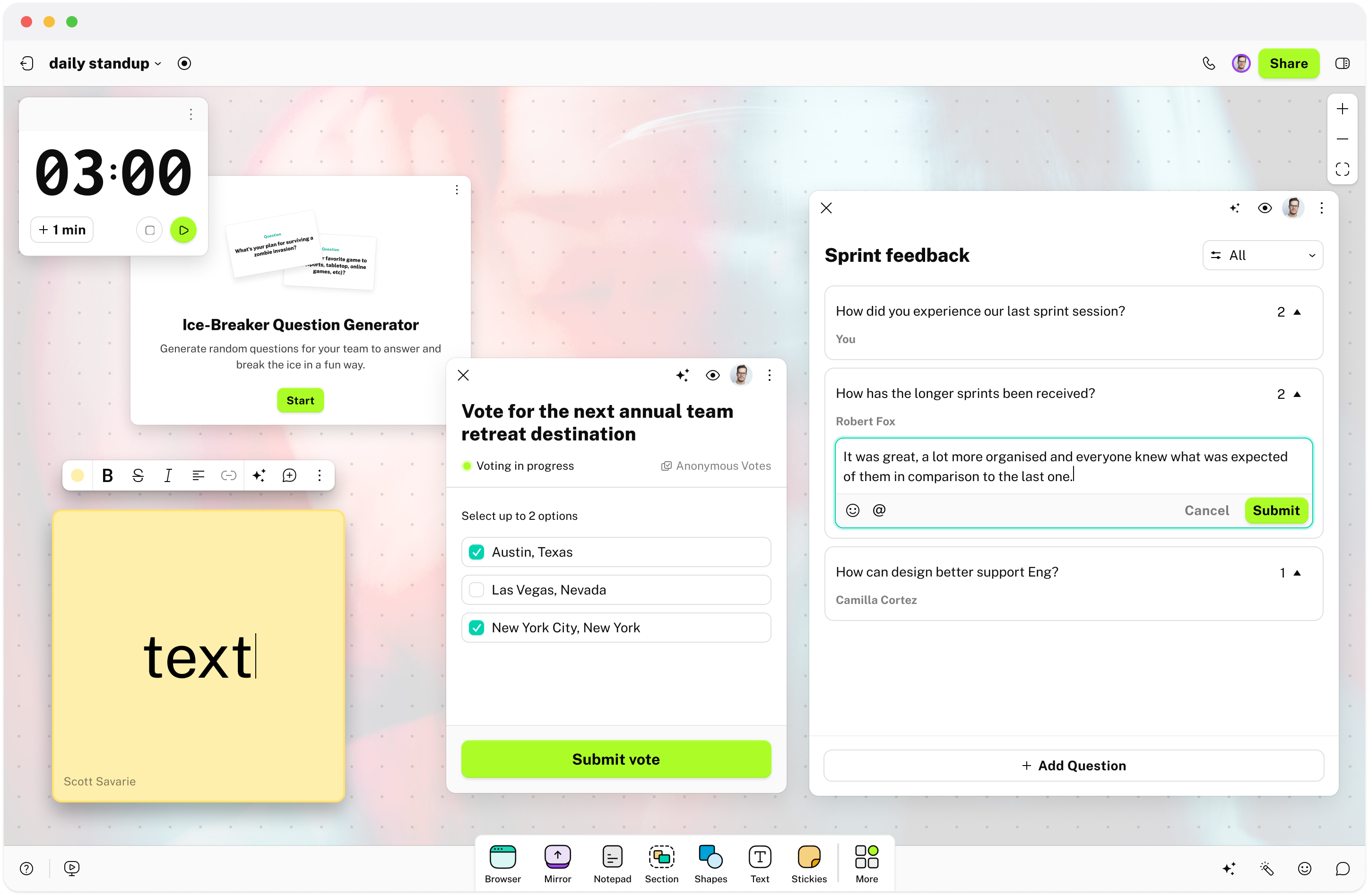
How can we make the canvas more engaging and keep users coming back for months?
We noticed users were more likely to return when they could add custom content to the canvas.
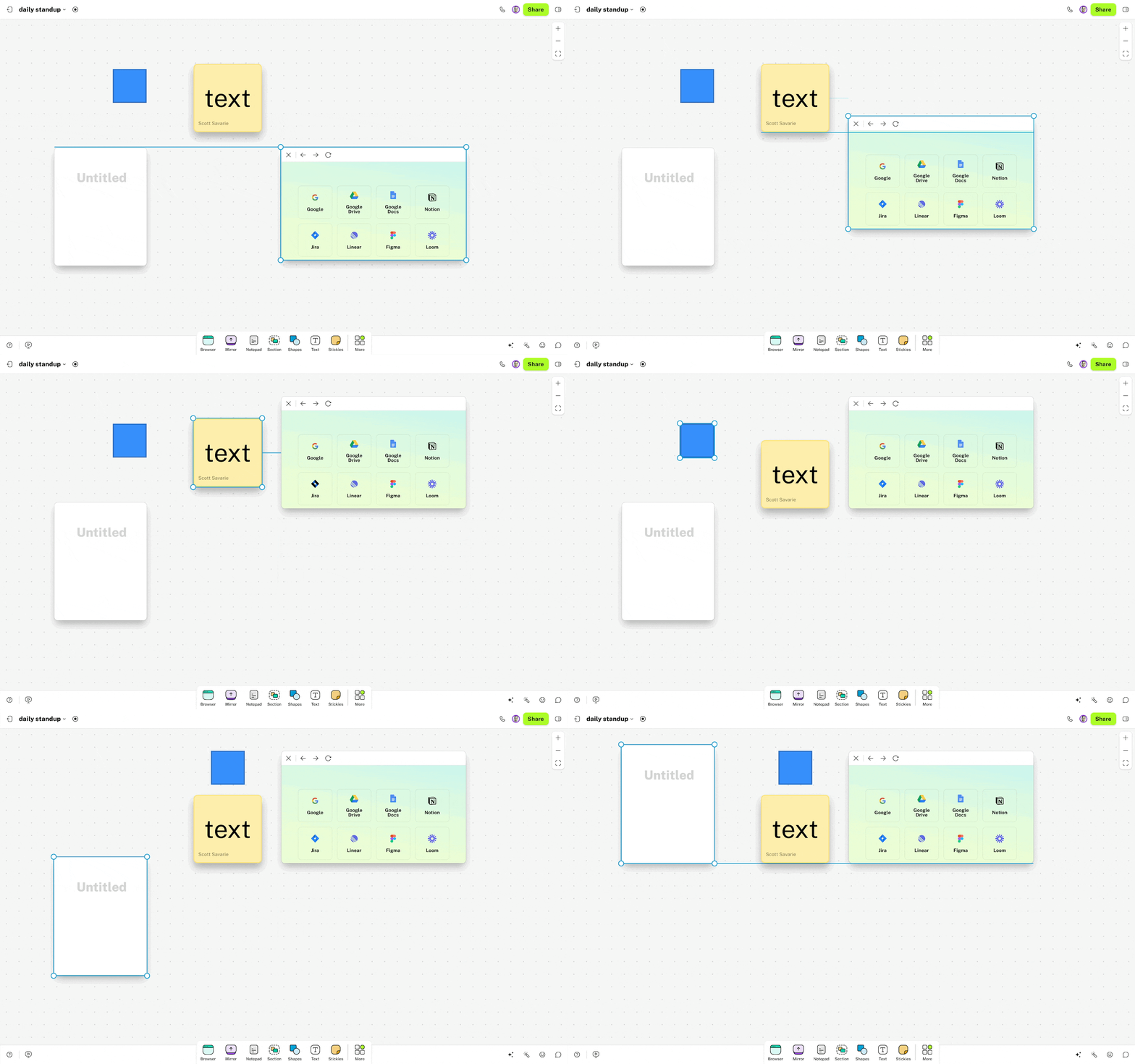
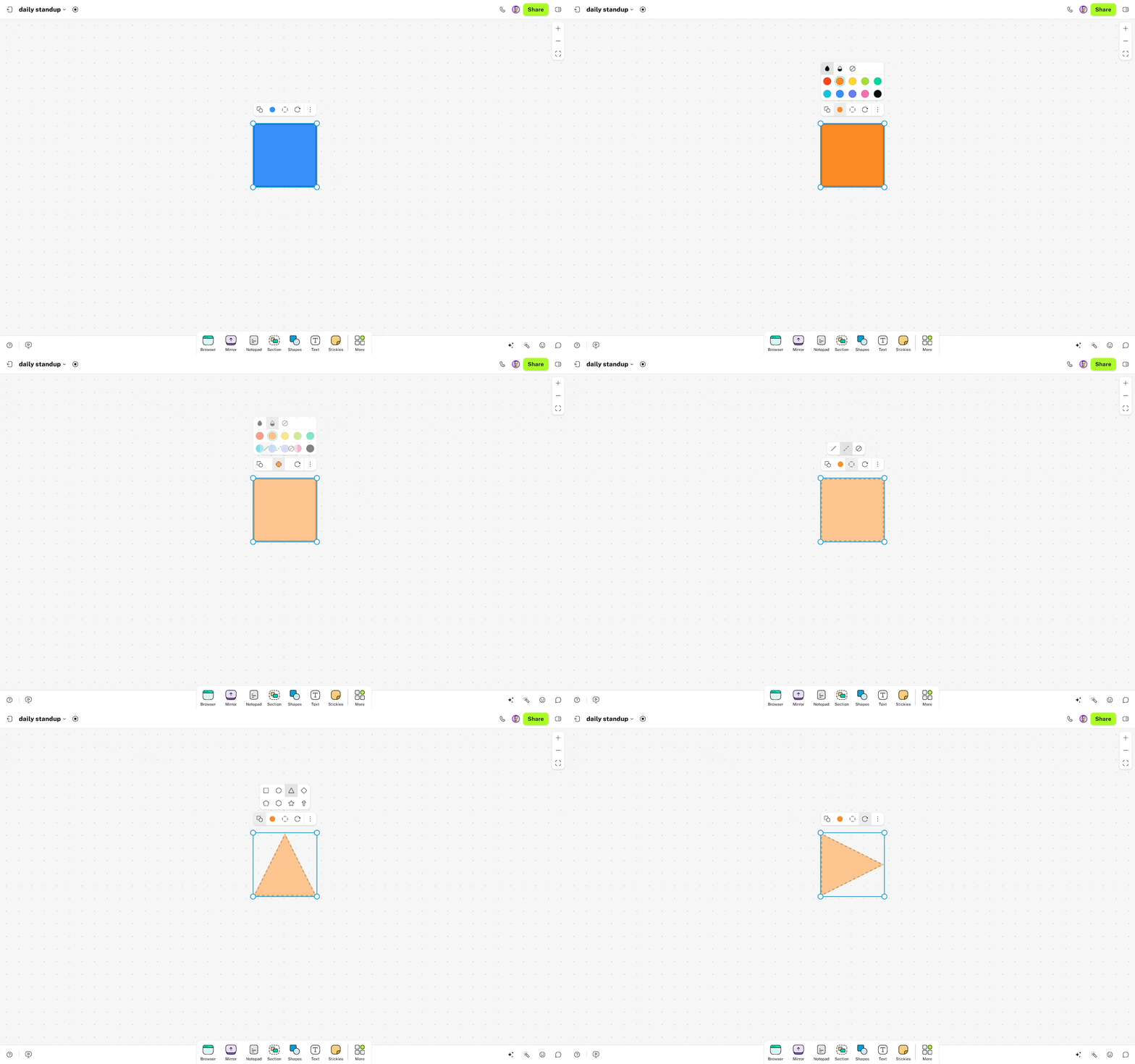
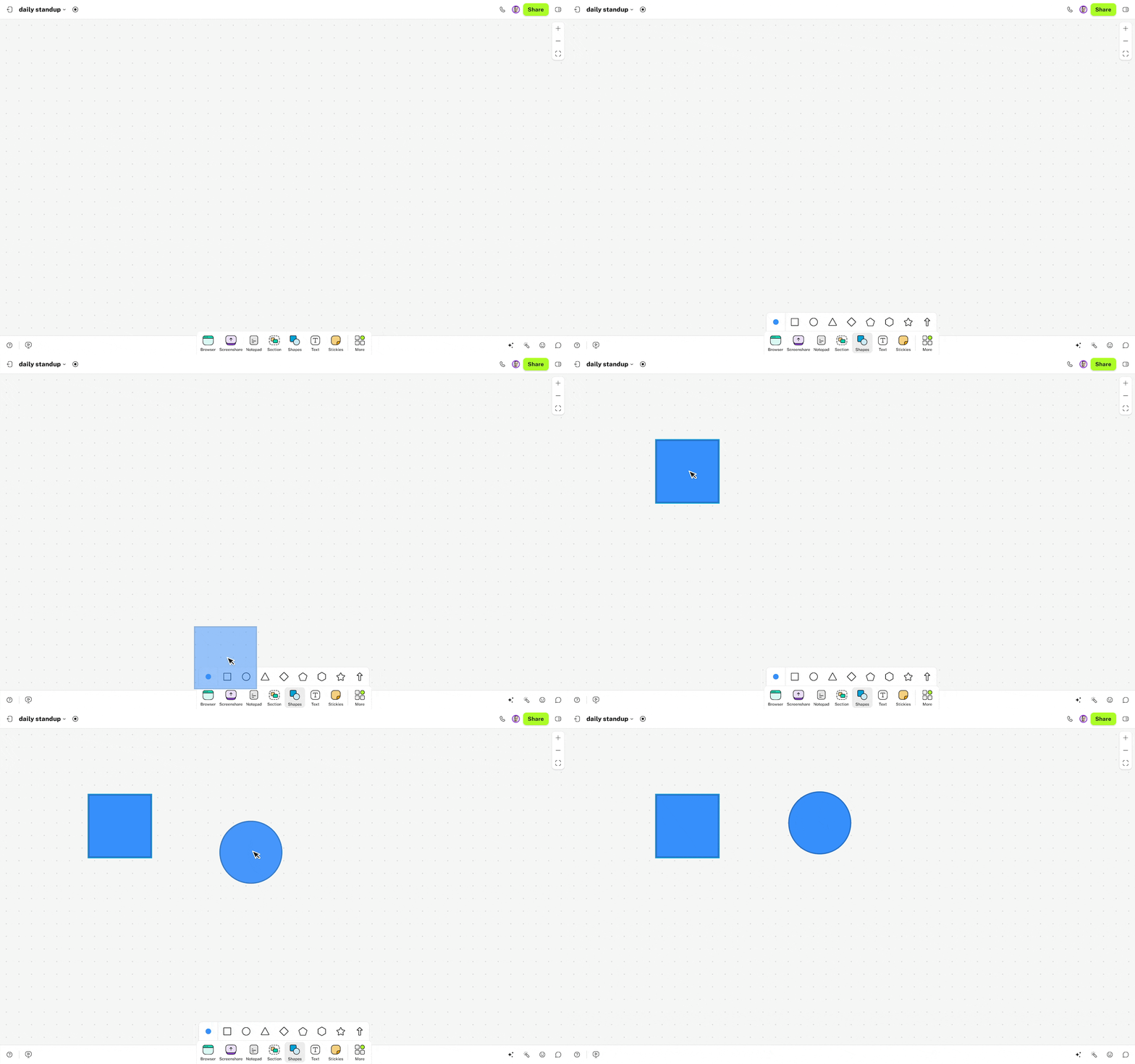
Our solution was to introduce a set of whiteboard tools, including shapes, connectors, text, and freehand drawing. These complemented our multiplayer browsers, sticky notes, and widgets. It was crucial that these new tools integrated seamlessly with existing collaborative workflows, enhancing rather than disrupting established processes.
These tools also helped reduce the need for multiple meetings (and sometimes eliminated the need for a meeting altogether!) and adapted for both sync and async collaboration.


How can we streamline workflows, boost productivity and make us more anticipatory for our users?
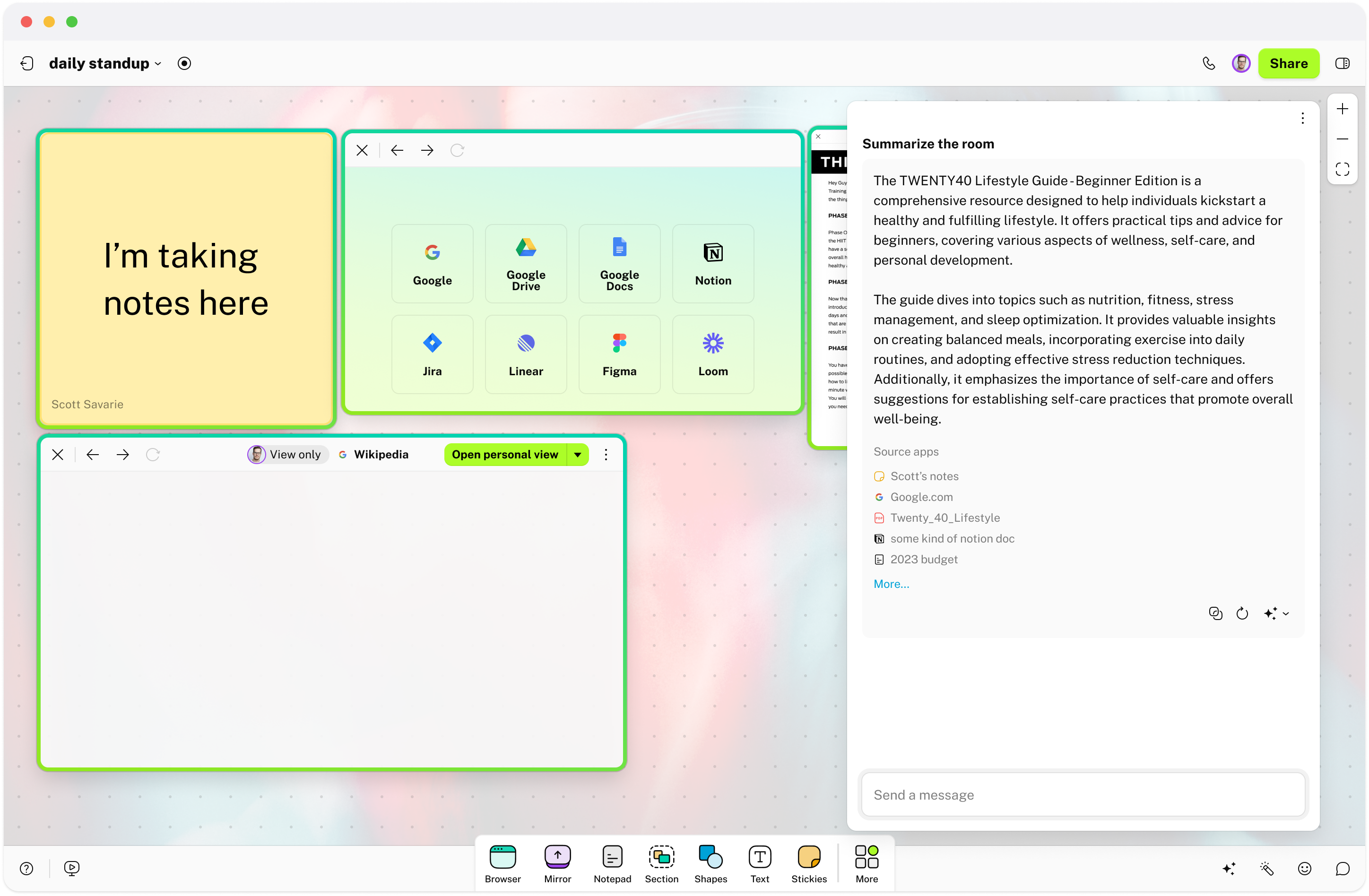
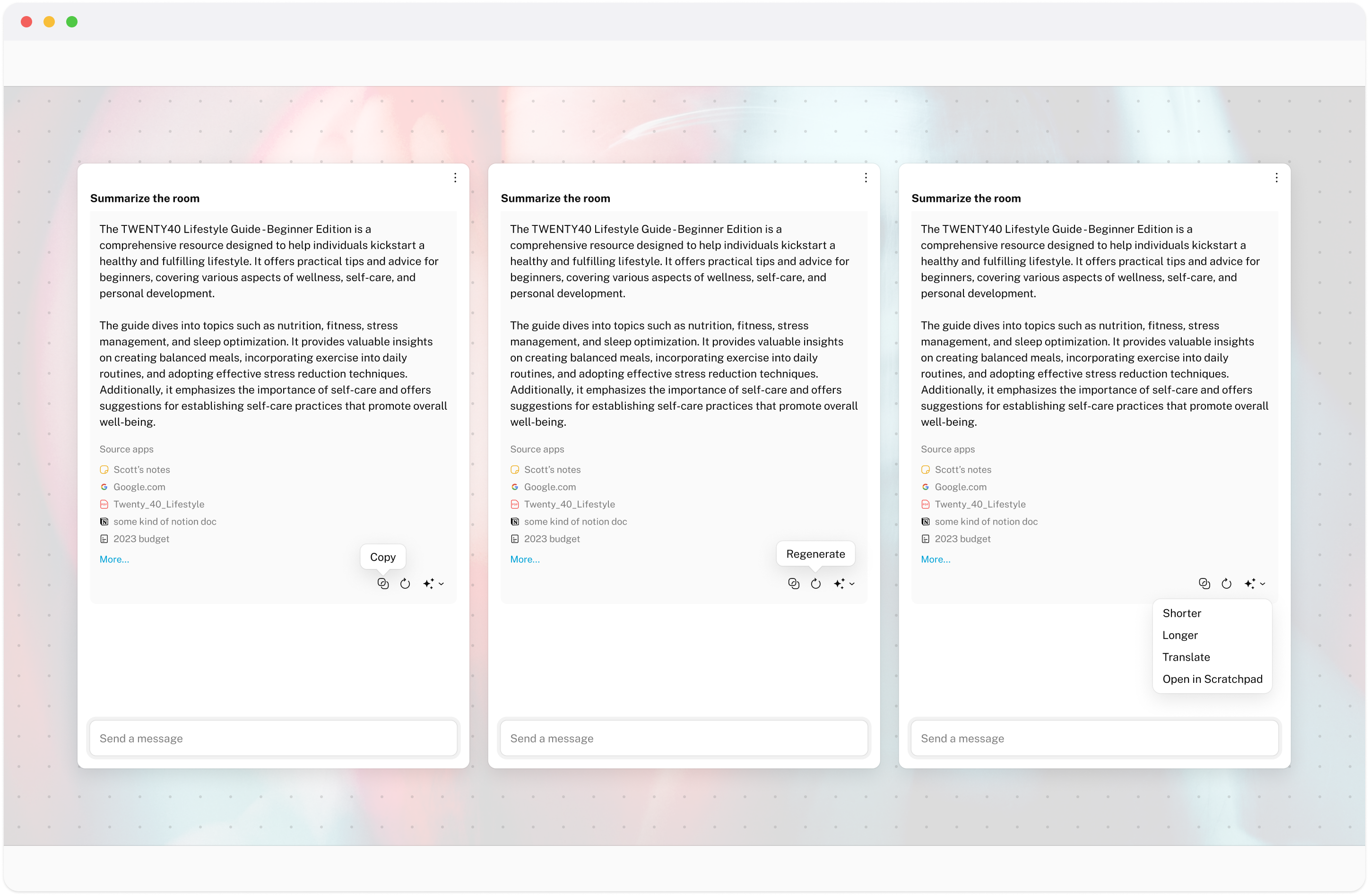
AI. We’ve all heard about it and used it. Our approach to integrating AI aimed to keep our collaboration seamless while adding efficient task management without disrupting workflows. We had bigger goals than just another ‘trendy feature.’
We found ways to use AI to automate repetitive tasks within our platform, reducing the burden on team members and freeing them up to focus on more important activities.
Anyone could grant the AI access to their preferred tools, such as Amplitude, Notion, Linear, or GitHub. This enabled the AI to provide actionable insights, helping users make more informed decisions.



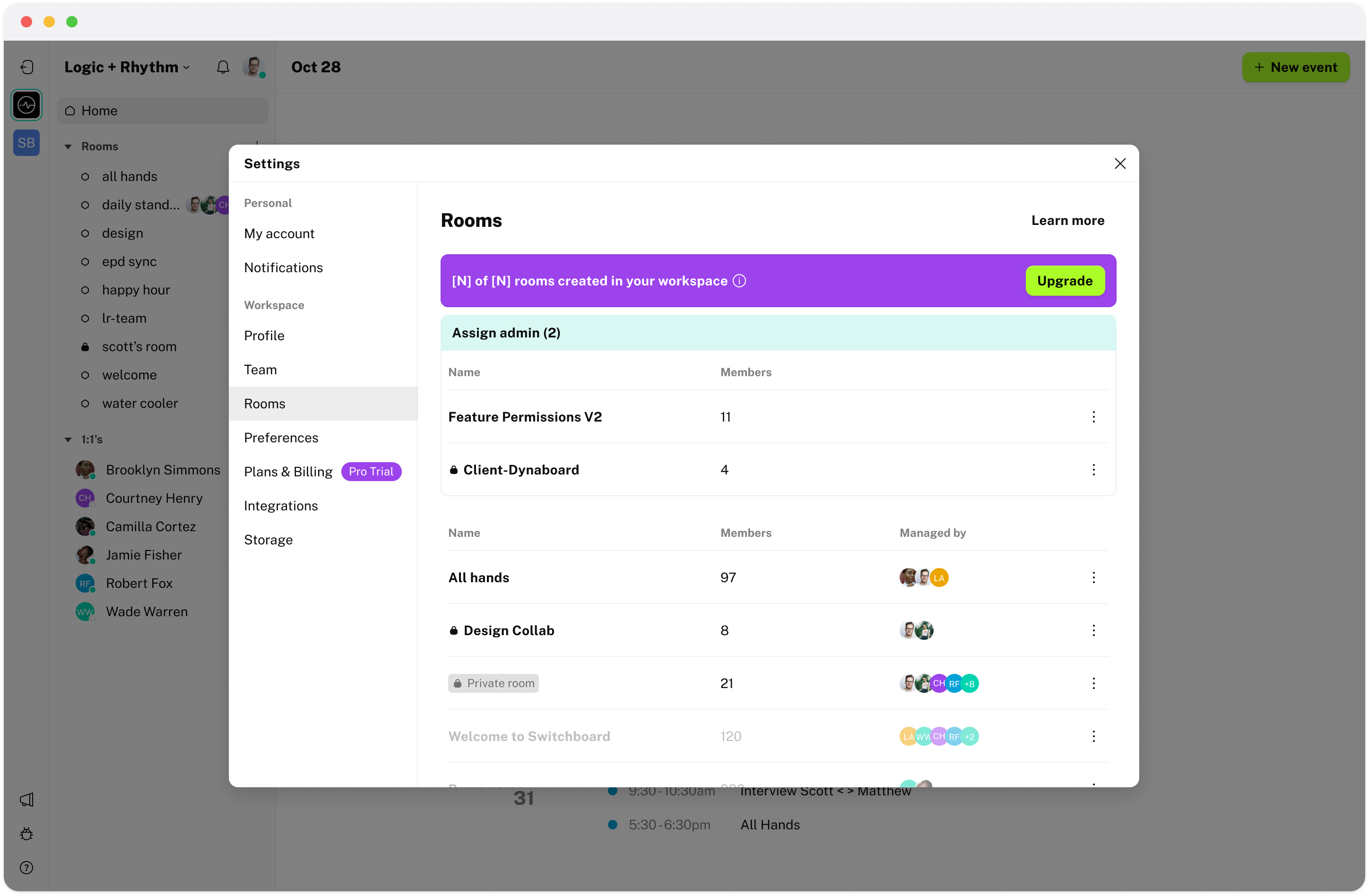
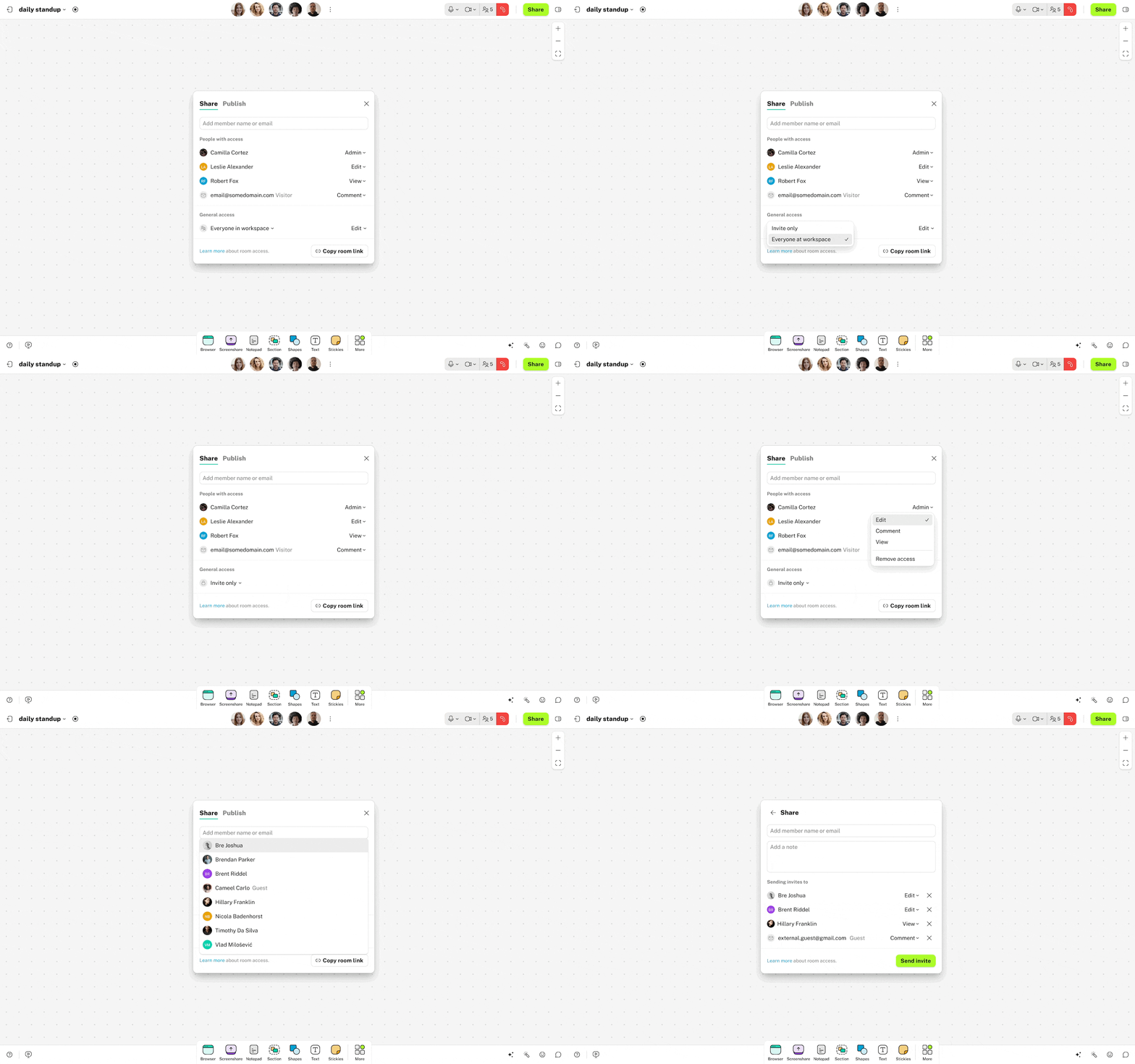
How can we build a flexible permissions system that keeps things secure while still allowing easy collaboration?
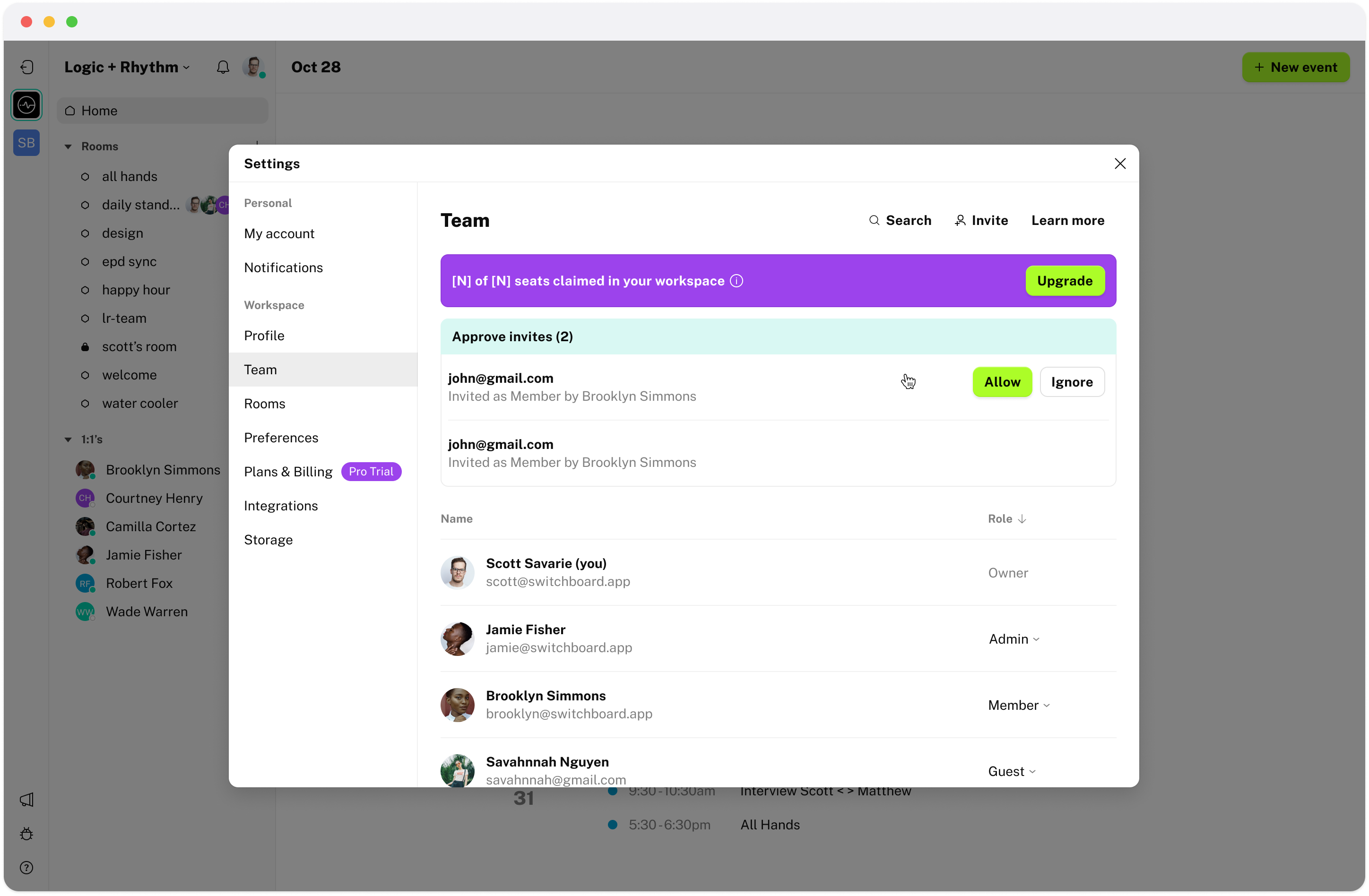
Adding multi-layer access to a product isn’t a simple task; it involves repeatedly going through every user flow to spot and fix any potential issues that could disrupt the user experience.
To make this work, we needed a system that allowed users to manage access at multiple levels. This meant controlling not only who could use the Switchboard app but also who could access specific features and content within the platform. We also leaned into a more async and single player focus which meant a different set of needs.
Our goals were to provide users with the control they need to maintain security and privacy, add flexibility on pricing and give us capabilities that would be useful in use-case-based onboarding.




 TIFFANY HUGHES ❤️ PRODUCT DESIGN